Monday July 13, 2026
www.thenewsdesk.ng
By Dennis UDOMA
The recent flash flood that swept through parts of Uyo and other communities in Akwa Ibom State was more than a natural disaster; it was a stark reminder of the growing environmental challenges confronting rapidly expanding urban centres across Nigeria.
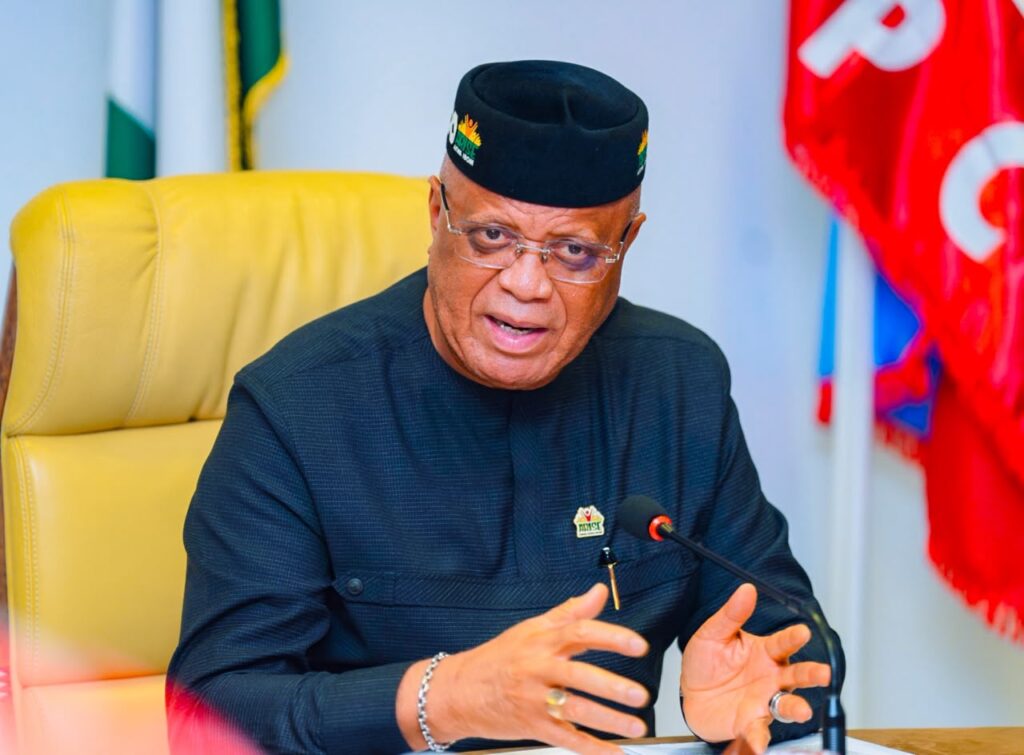
As residents counted their losses and struggled to recover from submerged homes, damaged property, and disrupted livelihoods, Governor Umo Eno’s call for a collective response offered an important perspective on a problem that cannot be solved by government action alone.
Flooding has become an increasingly recurring phenomenon in many Nigerian cities. From Lagos to Abuja, Yenegoa, Asaba, Calabar and Port Harcourt etc, intense rainfall combined with poor drainage systems, unchecked urbanization, and environmental neglect have transformed seasonal rains into annual disasters.
Uyo, despite its reputation as one of Nigeria’s cleanest and best-planned cities, is not immune to these realities.
Governor Eno’s reaction to the disaster reflects a practical understanding of the challenge.
While expressing sympathy for affected residents and assuring government intervention, he also highlighted an uncomfortable truth: many flood incidents are worsened by human actions. Blocked drainage channels, indiscriminate dumping of refuse, and poor environmental practices continue to undermine investments in infrastructure and urban development.
His appeal for residents to desilt drains around their homes and business premises should not be dismissed as shifting responsibility. Rather, it is a recognition that environmental sustainability requires shared ownership.
Government can construct major drainage networks, deploy contractors for large-scale desilting, and enforce environmental regulations, but it cannot monitor every gutter, street corner, and drainage channel across the state.
Indeed, one of the defining characteristics of successful cities worldwide is active citizen participation in environmental sanitation and management. Communities that understand the consequences of poor sanitation are often the first line of defence against flooding and environmental degradation.
The traditional communal spirit recalled by the Governor, where residents voluntarily cleared drains and maintained public spaces remains relevant till today.
However, citizens alone cannot bear the burden. The flood disaster also presents an opportunity for government agencies to reassess existing urban planning and environmental management strategies.
The increasing frequency of heavy rainfall linked to climate change demands a more proactive approach. Drainage infrastructure must be expanded and modernized to accommodate growing populations and changing weather patterns.
Building approvals should strictly consider drainage implications, while environmental laws must be enforced without compromise.
Furthermore, public awareness and enlightenment campaigns by the Ministry of Environment and the Akwa Ibom State Environmental Sanitation and Management should move beyond periodic sanitation exercises to sustained environmental education.
Many residents still underestimate the direct connection between a plastic bottle discarded into a gutter and the floodwaters that eventually invade homes and businesses. Changing attitudes requires continuous stakeholders engagement, not seasonal warnings.
The role of environmental agencies is equally critical. Agencies responsible for waste management, urban planning, and environmental protection must strengthen coordination and ensure timely intervention in identified flood-prone areas.
Early warning systems, community monitoring mechanisms, and routine inspections can significantly reduce the impact of future flooding incidents.
Governor Eno’s directive for immediate deployment of contractors and relevant agencies to affected communities is a welcome emergency response. Yet, the long-term solution lies beyond evacuation of stormwater and temporary desilting exercises. It requires institutional reforms, infrastructure investment, and a deliberate effort to build environmental consciousness among citizens.
The Uyo flood disaster should therefore serve as a turning point. It must inspire a renewed social contract in which government provides leadership and infrastructure, while residents embrace environmental stewardship as a civic duty.
The challenge before Akwa Ibom is not merely to recover from the latest flood incidences but to prevent the next one.
As climate-related disasters become more frequent, the choice is clear: continue with old habits and endure recurring devastation, or adopt a culture of shared responsibility that safeguards lives, property, and the future of the state.
The floodwaters may eventually recede, but the lessons they leave behind must not be allowed to wash away.
*Sir Udoma, is a prolific writer and frontline journalist in Uyo, Akwa Ibom State.
Beyond Uyo Flood Menace: Why Residents Must Embrace a New Culture of Environmental Responsibility