
Thursday September 10, 2026
www.thenewsdesk.ng
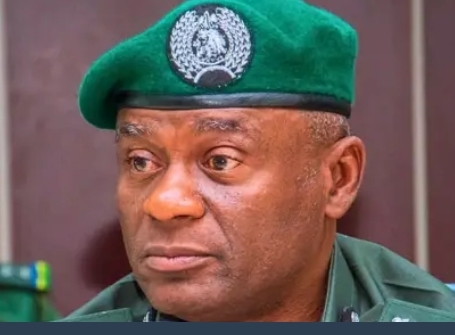
Inspector-General of Police, IGP Tunji Disu, has expressed concern over the increasing practice of citizens using their mobile phones to record police officers, describing the trend as “very, very demoralising” for members of the force.
IGP Disu spoke in Abuja during a meeting with the President of the Nigerian Bar Association, Oyinkansola Badejo-Okusanya, and members of the NBA executive committee.
The meeting was aimed at finding ways to prevent repeated confrontations between lawyers and police officers.
A video of the meeting was shared by TV Platinum on Wednesday, September 9, 2026.
The police chief said a recent court judgment concerning the recording of police officers had unsettled members of the force, claiming that people subsequently began filming officers in different locations.
“The recent judgement on recording of police officers, that one really jolted our officers. And it became something of concern to us because the citizens started coming out with their phones to record police officers everywhere they saw them,” Disu said.
He said the practice was no longer limited to officers carrying out their duties in public spaces, alleging that some citizens had even filmed police personnel while they were at restaurants.
“Everywhere you see a police man, start recording a police man. So this is something that was very, very demoralising to us,” the IGP said.
Disu, however, acknowledged that members of the public have the right to record police officers while they are performing their duties in public. He urged citizens to exercise that right responsibly.
“We are not saying they cannot exercise their rights of recording officers in the public places while doing their jobs,” he said.
“But they should put restraints and not turn our police officers to content for their skits or anything,” he added.
The IGP also drew attention to the difficult environments in which many police officers work, particularly those stationed at checkpoints and remote locations.
“If you look at where we have our officers on checking points, there are dangerous areas thick in the forest, thick in the bushes, on the highways, middle of nowhere,” Disu said.
He added that officers were often required to remain in such locations “morning and night” as part of their responsibility to protect citizens.
Badejo-Okusanya agreed that a distinction should be made between legitimate documentation of police activities and recordings that violate officers’ privacy.
“Policemen sitting down somewhere eating and people are recording them and intruding on their privacy,” she said.
At the same time, the NBA president cautioned that concerns about privacy should not be used to discourage transparency when officers are lawfully carrying out their duties.
“We should not be afraid of being transparent in the lawful execution of our duties,” Badejo-Okusanya said.
She pointed to the use of body cameras by police officers in the United States as an example of how recording can strengthen accountability.
“When the US introduced body cams for police officers, it was in order to promote that so that you yourself, you have a check, you know that whatever you’re doing, you have a body camera that is recording it,” she said.
According to Badejo-Okusanya, recording mechanisms can help establish what happened during encounters between officers and members of the public and make it easier to identify and sanction misconduct.
She argued that the answer was not to completely stop citizens from recording police officers but to establish clearer limits that protect privacy while preserving accountability.
“We just need to understand the limits,” she said, adding that existing laws could be strengthened or interpreted to prevent the abuse of the right to record.
Badejo-Okusanya stressed the importance of cooperation between the legal profession and the police, describing both groups as “partners in the same quest to ensure that we have a safe and vibrant society that respects the rule of law.”
(First DAILY)