

Thursday February 5, 2026
www.thenewsdesk.ng
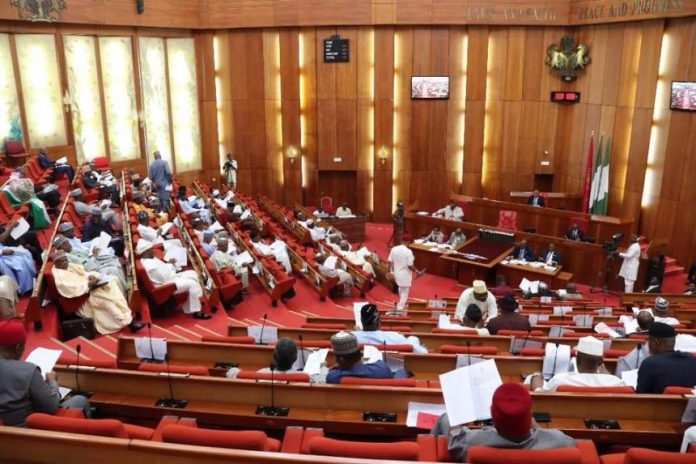
The Nigerian Senate after six hours clause by clause amendment of electoral act on Wednesday, February 4, 2026, has finally passed the third reading of the Electoral Act 2022 (Repeal and Reenactment) Amendment Bill 2026. The bill introduces several changes to election timelines, technology, and penalties, while retaining certain existing provisions.

Key Legislative Changes and Rejections
1. Electronic Transmission of Results (Clause 60)
The Senate rejected a proposed amendment to make the electronic transmission of results mandatory.
The rejected proposal would have required presiding officers to transmit polling unit results to the IREV portal in real time after forms were signed. At least to reduce abracadabra between the time the result is moved from the polling unit to the collation center.

Meanwhile, the Senate maintained the current law, which allows the Commission (INEC) to prescribe the manner in which results and accreditation data are transferred.
2. Voter Identification and Accreditation (Clause 47)
Technology Upgrade: The Senate officially replaced “smart card readers” with the Bimodal Voter Accreditation System (BVAS) for accreditation and voting.

Voter ID: Lawmakers rejected electronically generated voter identification. The Permanent Voter Card (PVC) remains the sole mandatory mode of identification at polling units.
3. Revised Election Timelines
The Senate approved significant reductions to administrative timelines:
Notice of Election (Clause 28): Reduced from 360 days to 180 days before the election date.
Submission of Candidate Lists (Clause 29): Reduced from 180 days to 90 days before the general election.

4. Penalties for PVC Offenses (Clause 22)
The Senate rejected a proposed 10-year prison sentence for the buying and selling of PVCs. Instead, it:
Retained the two-year imprisonment term.
Increased the fine from ₦2 million to ₦5 million.
5. Legal Evidence and Non-Compliance (Clause 142)
The Senate struck out Clause 142, which would have allowed parties to prove non-compliance using only original or certified documents without the need for oral evidence. The provision was removed to prevent what lawmakers termed a “waste of time in court.”
6. Ballot Paper Inspection (Clause 44)
The Senate retained the existing process for ballot paper verification:
Parties have two days to submit a written approval or disapproval of their representation on those samples.
INEC must invite political parties to inspect their identities on sample electoral materials at least 20 days before an election.
