

Friday January 23, 2026
www.thenewsdesk.ng
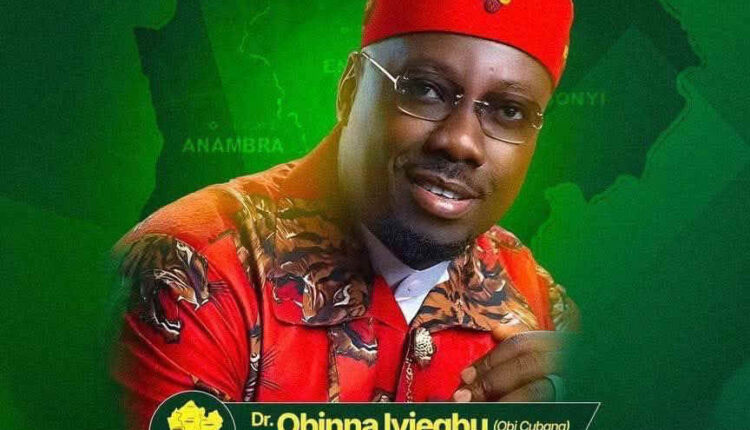
The All Progressives Congress (APC) has appointed billionaire businessman and socialite, Obinna Iyiegbu, popularly known as Obi Cubana, as the South East Zonal Coordinator of the City Boy Movement, a political support group backing President Bola Ahmed Tinubu ahead of the 2027 general elections.
The appointment, which was confirmed by insiders within the movement, signals a strategic effort by the ruling party and its allies to strengthen grassroots mobilization in the South East, a region where the APC has historically faced electoral challenges. With Obi Cubana’s vast influence among youths, entrepreneurs, entertainers, and the wider Igbo business community, political observers say the decision reflects a calculated attempt to reshape political narratives and expand the party’s reach in the zone.

The City Boy Movement is a pro-Tinubu political organization established to galvanize nationwide support for President Tinubu’s re-election bid in 2027. The group focuses largely on youth engagement, grassroots advocacy, and countering what it describes as misinformation and negative narratives surrounding the Tinubu administration.
The movement is spearheaded by Seyi Tinubu, the president’s son, who serves as its Grand Patron. Over the past year, Seyi Tinubu has been actively involved in outreach efforts across different regions of the country, particularly targeting youths, informal sector players, and business leaders.
Obi Cubana’s appointment as South East Zonal Coordinator places him at the forefront of the movement’s activities across the five states of the region—Abia, Anambra, Ebonyi, Enugu, and Imo. His responsibilities will include coordinating state chapters, mobilizing grassroots supporters, engaging community leaders, and helping to articulate the administration’s policies in ways that resonate with local populations.

Obi Cubana is widely regarded as one of the most influential entrepreneurs in Nigeria’s hospitality and entertainment sector. As the chairman of the Cubana Group, his business empire spans hotels, lounges, and nightlife brands across major Nigerian cities. Beyond business, he has built a powerful personal brand rooted in philanthropy, youth empowerment, and community development, particularly in the South East.
His rise to national prominence was further amplified by the widely publicized burial ceremony of his late mother in 2021, which showcased his extensive network across business, entertainment, and political circles. Since then, Obi Cubana has increasingly been viewed not just as a businessman, but as a cultural and social force with the ability to shape public opinion.

Political analysts believe his entry into a more formal political coordination role could significantly alter the dynamics of political engagement in the South East. “Obi Cubana commands a level of loyalty and admiration among young people that traditional politicians struggle to achieve,” said a political analyst based in Enugu. “For the APC, this is about leveraging soft power—culture, influence, and aspiration—to gain political ground.”
Sources familiar with the development revealed that Obi Cubana’s appointment followed a series of strategic meetings held in late 2025 and early 2026 between Seyi Tinubu and prominent South East business figures. These engagements were reportedly held under the broader “Change Nigeria” initiative, a platform aimed at fostering dialogue between the Tinubu administration and private sector leaders.

Among those involved in the meetings were notable entrepreneurs such as Emeka Okonkwo, popularly known as E-Money, alongside other influential figures from the region’s business and creative industries. The discussions reportedly centered on economic inclusion, youth empowerment, regional development, and ways to bridge the trust gap between the federal government and South East communities.
Insiders say Obi Cubana emerged as a consensus choice for the zonal coordinator role due to his non-partisan appeal, strong grassroots connections, and ability to communicate effectively with younger demographics.
One of the core mandates of the City Boy Movement is youth inclusion, an area where Obi Cubana is expected to play a pivotal role. Nigeria’s youth population remains a decisive force in elections, and the South East is home to a vibrant, politically conscious young demographic.
The movement aims to create platforms for dialogue, town hall engagements, and social initiatives that highlight the Tinubu administration’s economic reforms, infrastructure projects, and social intervention programs. According to movement insiders, Obi Cubana will also oversee efforts to counter negative narratives about the APC-led federal government, particularly on social media and within informal community spaces.
“People listen to people they trust,” a source within the movement said. “Obi Cubana is not seen as a career politician. He’s seen as someone who understands hustle, business, and the realities young people face. That credibility matters.”
Obi Cubana’s appointment comes as part of a wider organizational build-up by the City Boy Movement ahead of 2027. The group recently ratified several state and zonal directors across the country, signaling its intention to establish a robust political structure well ahead of the next election cycle.
Among the notable appointments are Chief Nwaneri Goodluck Chidera as Imo State Director, Hon. Tiza Isaac Imojime Orya for Benue State, Hon. Wakili Boya for Adamawa State, Moyosore Adedoyin Ogunlewe for Lagos State, and Hon. Bitrus Laurence Garki for the Federal Capital Territory (FCT).
These appointments reflect the movement’s nationwide scope and its emphasis on recruiting individuals with local influence and organizational capacity.
Reactions and Implications
Reactions to Obi Cubana’s appointment have been mixed. Supporters of the APC have welcomed the move, describing it as a bold step toward inclusivity and regional balance. They argue that engaging respected figures from the South East could help address long-standing perceptions of marginalization.
However, critics have raised concerns about the growing intersection of celebrity culture and politics, questioning whether social influence should translate into political authority. Others have also pointed out that the South East remains a politically complex region, and winning hearts may require more than high-profile appointments.
Despite the debates, one thing appears clear: the APC, through the City Boy Movement, is laying the groundwork for an aggressive and unconventional campaign strategy ahead of 2027. With Obi Cubana now positioned as a key mobilizer in the South East, the political temperature in the region is expected to rise in the coming months.
As Nigeria edges closer to another critical election cycle, the involvement of influential non-traditional political actors like Obi Cubana underscores a shifting political landscape—one where culture, business, and grassroots influence may prove just as decisive as party structures and political rhetoric.
(The NewsGuru)
